The Beginning of Pierpont Bay
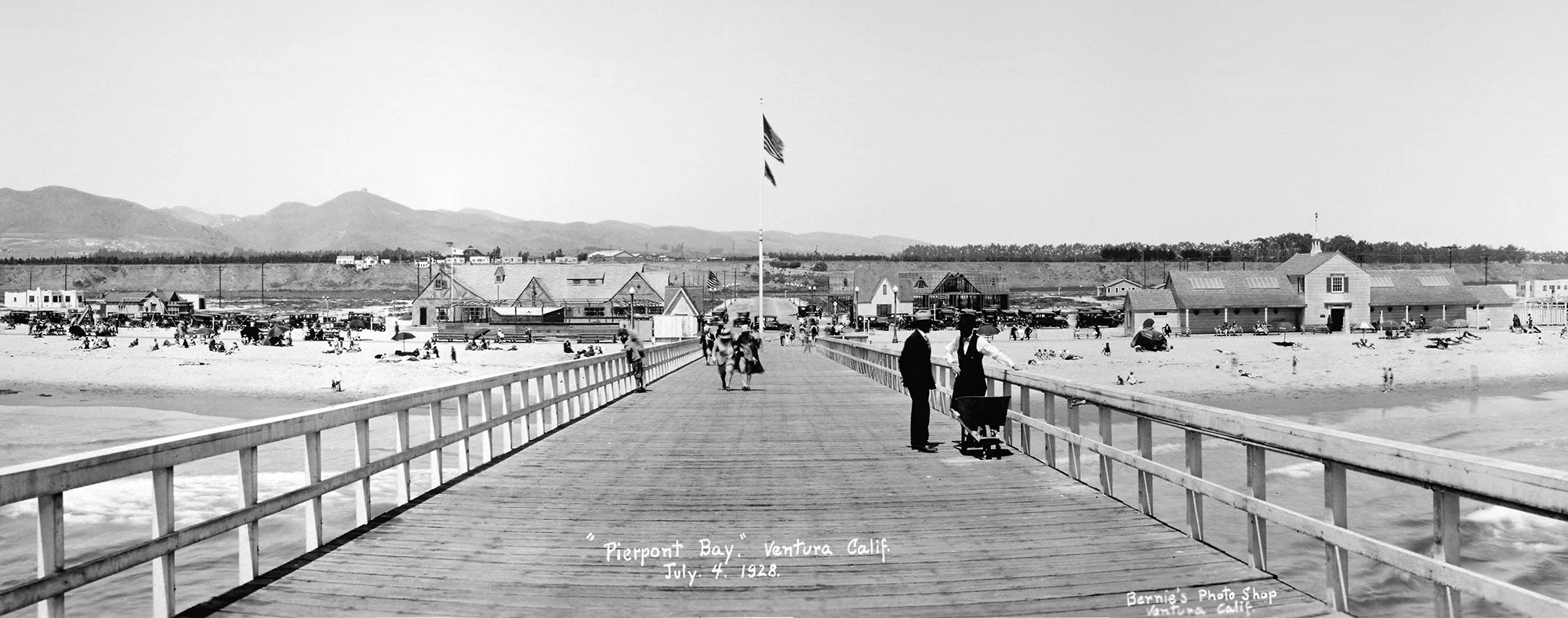
Southern California was a magical place in the 1920s.
Hollywood was booming. New roads stretched across open countryside. Rows of citrus stretched across the landscape, and developers looked west toward the Pacific, imagining new communities along the coast.
Los Angeles was expanding beyond its city limits, planting roots in beach towns like Venice, Santa Monica, and Long Beach. The automobile was changing how people lived, worked, and vacationed. For many Americans, California wasn't just a holiday; it was a dream. And along the quiet coastline between Ventura and the ocean, that dream would eventually take shape as Pierpont Bay.
Among those captivated by California's coastal promise was developer Frank Meline. Looking north from Los Angeles, he saw opportunity in the growing town of San Buenaventura, where a wide stretch of undeveloped beachfront sat between the city and the Pacific. In 1924, in partnership with several prominent Ventura County citizens, Frank Meline Co. purchased a two-mile stretch of beachfront for $300,000.
Meline envisioned more than a beachfront subdivision. He envisioned a carefully planned seaside community. At its center would be a bathhouse, hotel, and pleasure pier. The residential lots were arranged around small courts connected by narrow lanes, creating a neighborhood unlike anything else in Ventura. Along the oceanfront ran Shore Drive, a scenic roadway separating the first row of homes from the beach.


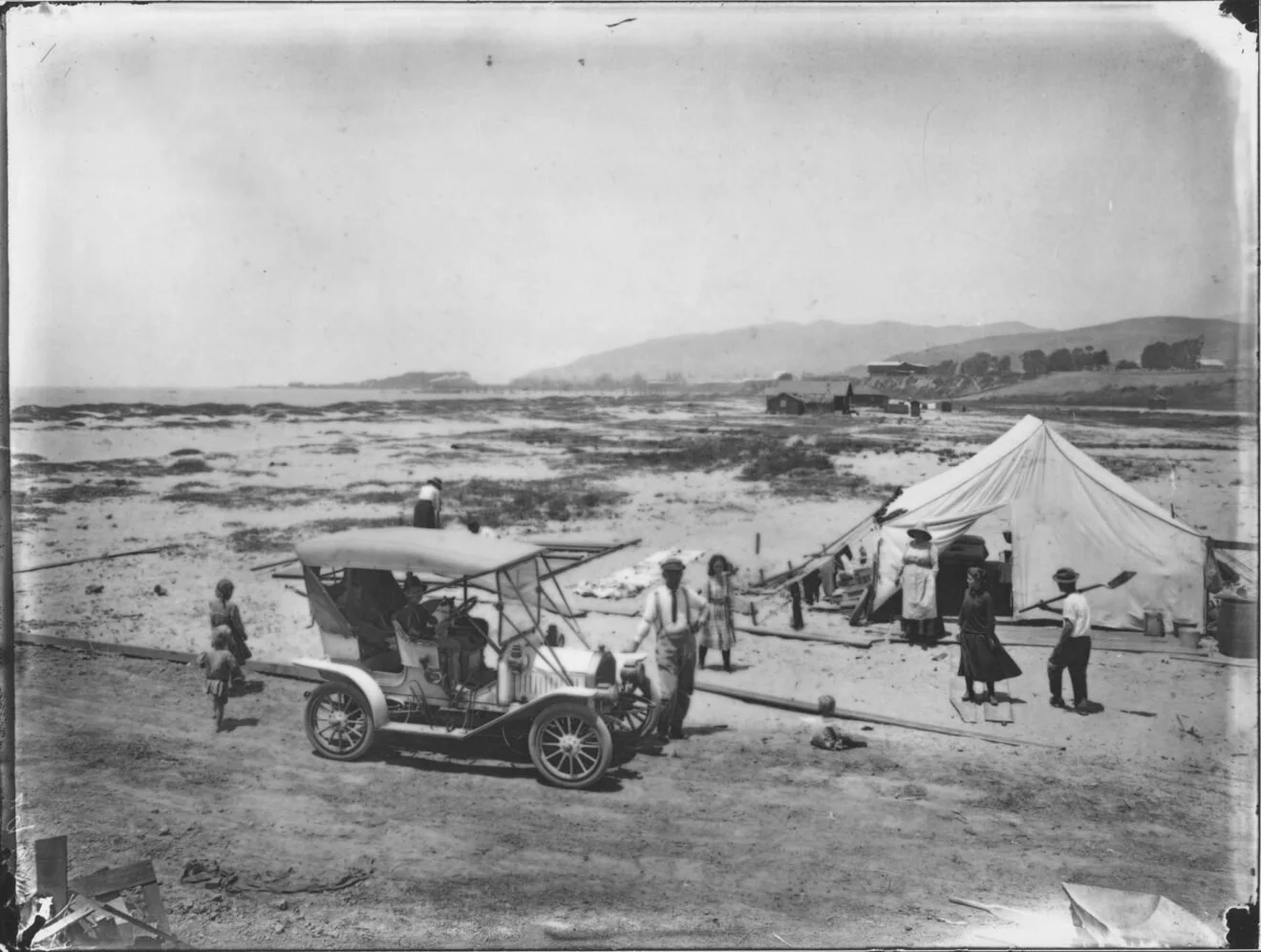
Camping in Pierpont Bay, early 1920’s.
The design drew heavily from English influences. The courts carried English-inspired names such as Gloucester Court, Plymouth Court, and Rockaway Court. Names that still appear on street signs today! Homes were originally designed to face the courts rather than the lanes, a detail still visible in some of the neighborhood's oldest houses. What is now a backyard or back door was once intended to be the front of the home.
The development's English inspiration extended beyond street names. Buyers were encouraged to build English cottage-style homes, and all architectural plans were reviewed by an art jury to ensure consistency throughout the community. Deed restrictions prohibited businesses deemed “undesirable”, including saloons, foundries, brickyards, cemeteries, fish canneries, slaughterhouses, and reform schools.
“The first impression of a visitor to Pierpont Bay is its quiet restfulness and charm. A leading landscape architect, internationally famous, describes Pierpont Bay, with its backdrop of rolling hills and the intriguing panorama of the Santa Cruz Island in front, as a scene of “melting loveliness.”
-1926 Ventura County Star newspaper advertisement

As plans moved forward, one question remained: what should the new community be called? In 1925, the Frank Meline Company held a public contest to name the tract. Two entrants independently submitted the same winning name—Pierpont Bay. Each received a $100 prize, worth roughly $1,700 today.
By 1927, work was in full effect, putting in roads, building a pleasure pier, and paving Shore Drive along the beach. At the time, coastal communities were centered around entertainment and beachgoing, with boardwalks and a Pleasure Pier. Pleasure Piers first emerged in England in the 19th century, carrying travelers from the shore to steamers out at sea. Over time, pleasure piers evolved into an entertainment mecca, from grand pavilions and theatres to amusement rides, music, and restaurants in the 20th century. Piers were the place to see and be seen at the seaside.
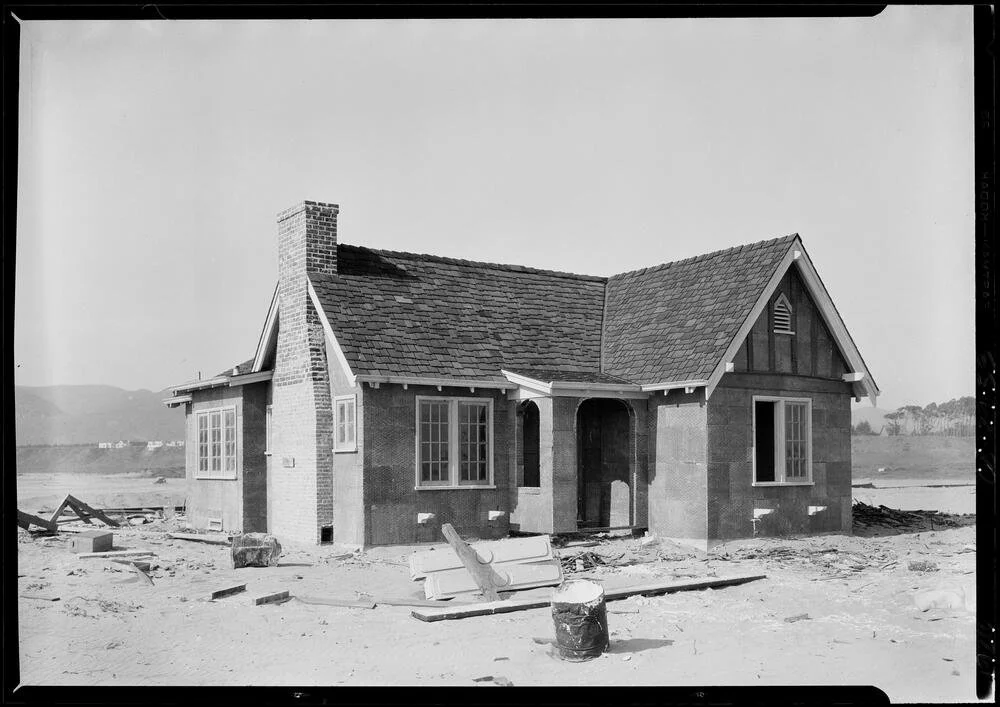
Photograph of exterior of house under construction, Pierpont Bay, Ventura 1926.

Photograph of interior of house under construction, Pierpont Bay, Ventura 1926.

Photograph of exterior of house under construction, Pierpont Bay, Ventura, 1926.
If you build it, they will come. And they did. Rumor has it that beachgoers had to arrive shortly after sunup to claim a spot. Along the boardwalk were taverns, trinket stores, candied apples, five-cent hot dogs, events, and parties. Every big celebration was centered around Pierpont Pier. 4th of July parties, bathing beauty contests, and clubs.
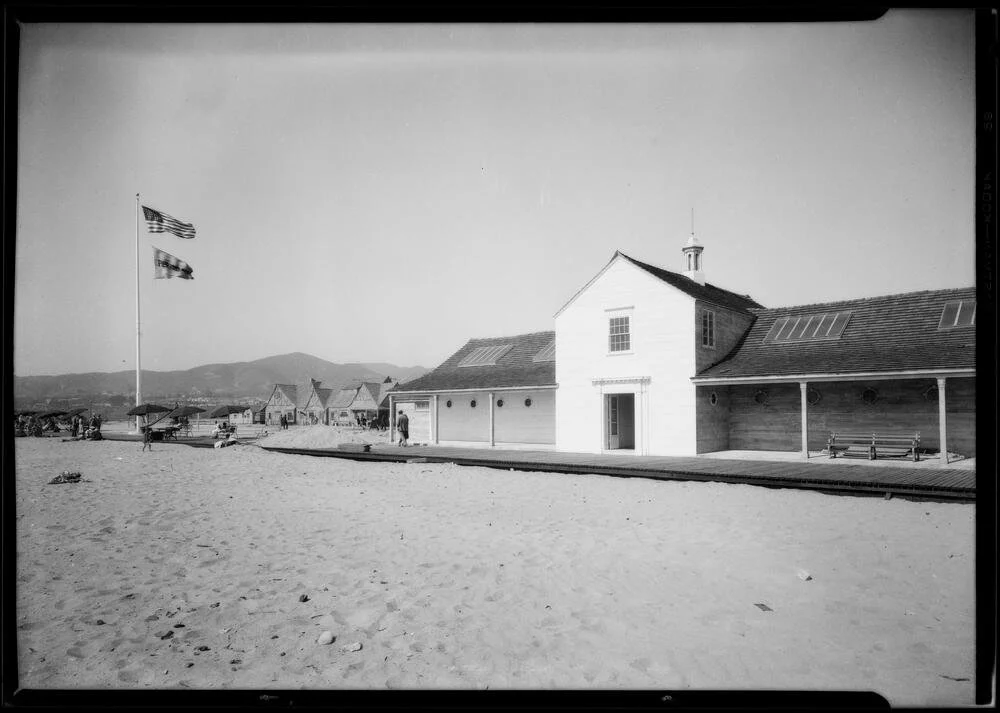
Photograph of the Pierpont Bay Boardwalk with “Pierpont Bay”, on the flag.
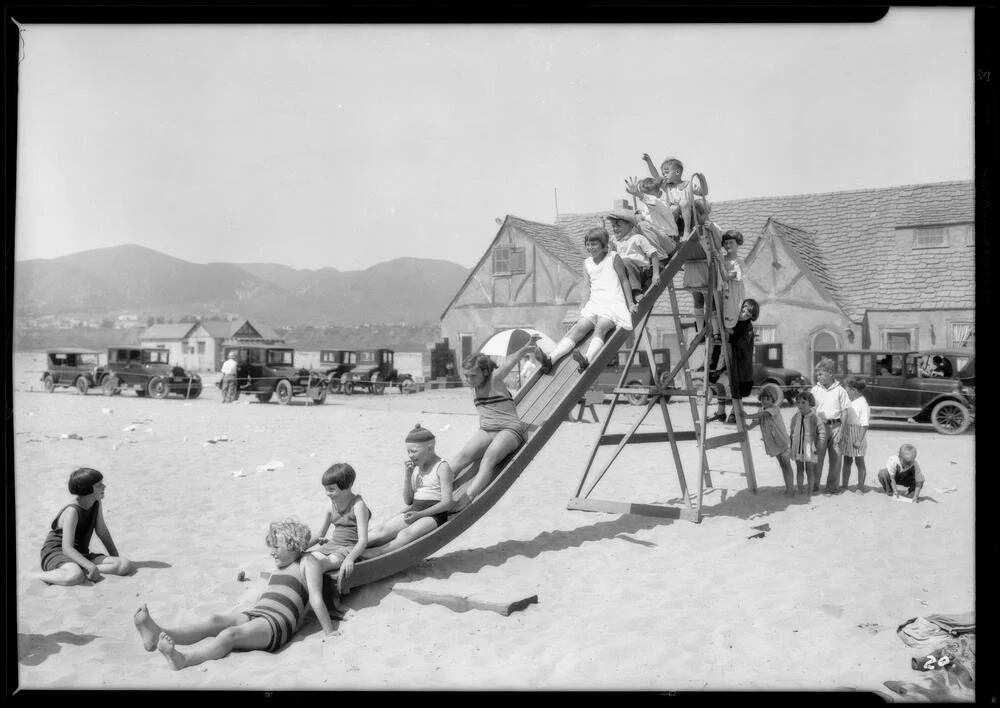
Photograph of children at Pierpont Bay, Ventura, 1926.

Richard George Stobs (left) and Edward E. Mosher (right) standing in front of a bait shop on the Pierpont Pier.
The 1929 stock market crash quickly changed the course in Pierpont Bay. The beach was still a destination, but sales slowed, and construction stopped. Lots struggled to sell, and home construction halted.
Then nature reminded everyone who truly controlled the coastline. On a winter night in 1936, a king tide and powerful surf battered the shoreline. A second storm followed soon after. Together, they destroyed the Pierpont Bay pier, bathhouse, boardwalk, and much of Shore Drive beyond repair. The bathhouse was torn down in 1937. Houses built along the oceanfront were moved inland, one by one. Some moved to midtown Ventura, others trekked up to the Ojai Valley.
The storms effectively put Pierpont's original vision on hold.
For the next twenty years, much of the neighborhood remained partially developed, with empty lots and drainage issues. When building picked back up in the 1950s, those remaining lots slowly filled in.

Aerial view of Ventura, 1936.
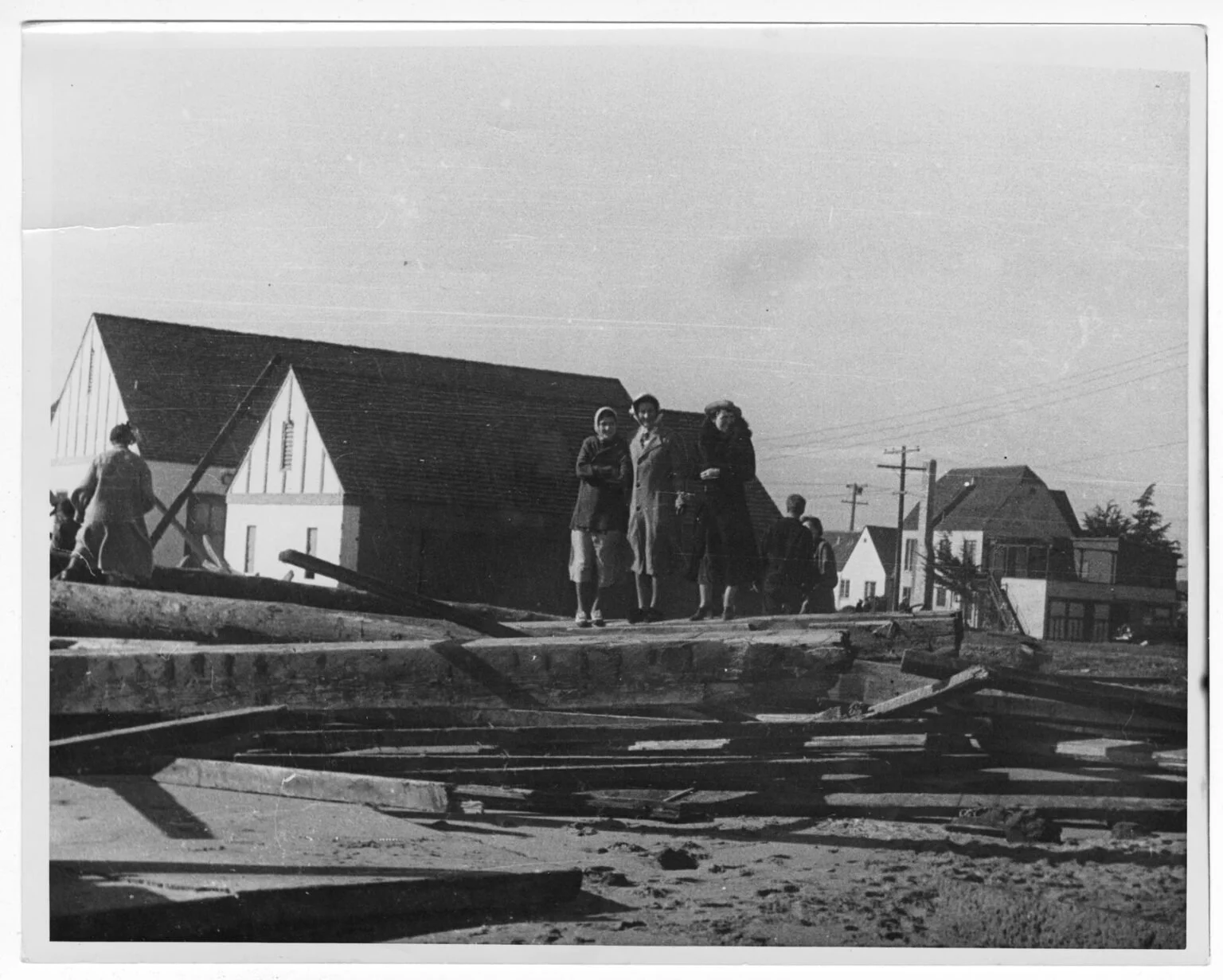
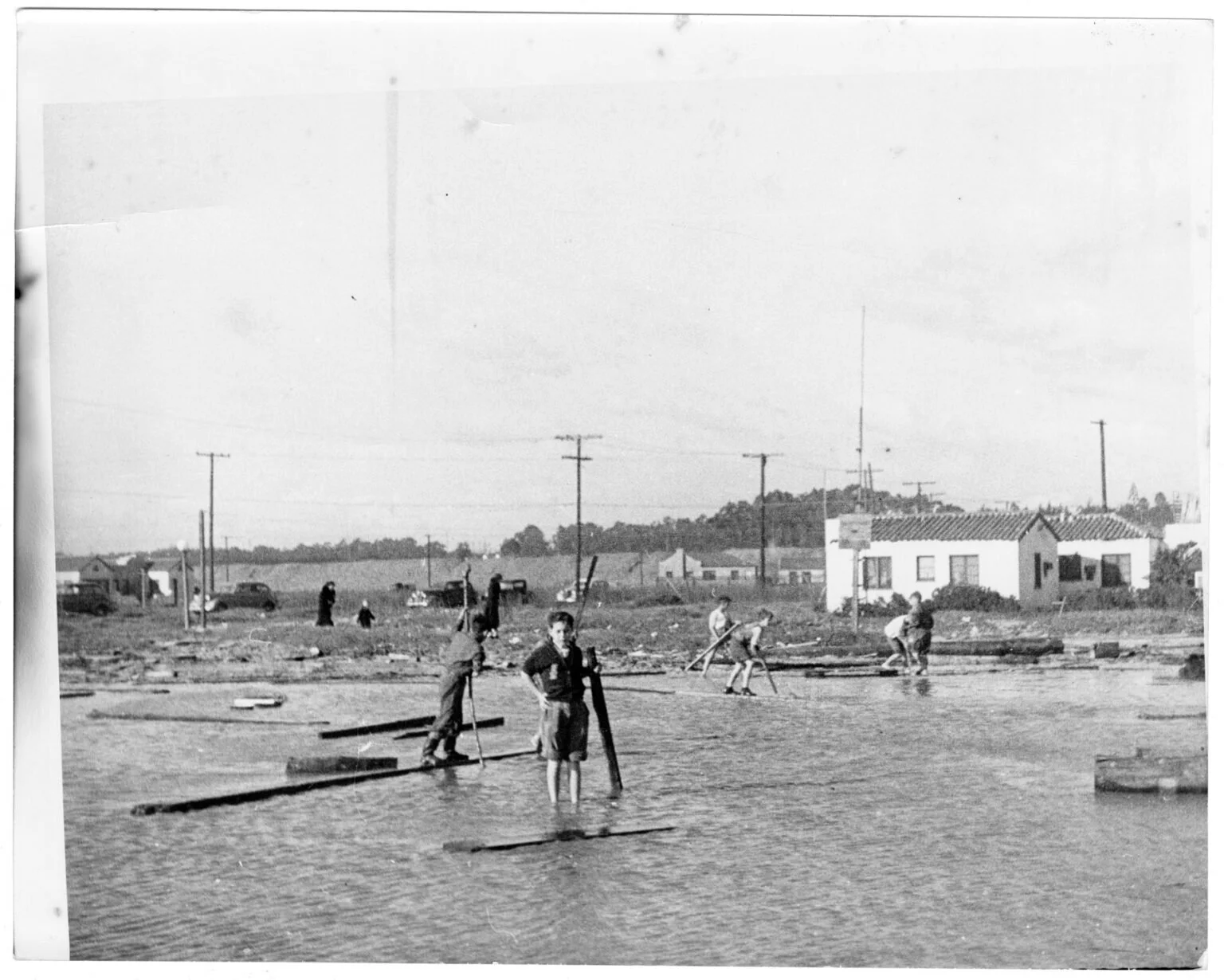
By then, the carefully planned English cottage community of the 1920s was gone. Instead, Pierpont grew one house at a time. Small beach cottages, mid-century homes, and later custom houses all found their place here, creating the eclectic neighborhood we know today.
Shore Drive, the Pleasure Pier, and the boardwalk are long gone. Memories buried beneath the dunes.
-Shannon Kenny